


Large industrial groups built PLM software for their own use in the 1980s. It worked so well that it became standard practice in aerospace and automotive. Its cost, though, kept small and mid-sized manufacturers out for decades. Cloud PLM changed that. Today, a 50-person supplier can run the same product data processes as a Tier 1 OEM, and go live in weeks instead of years. These six benefits of PLM software explain why manufacturers of every size now see it as essential.
📌 TL;DR
- PLM ends version errors by giving teams one source of truth for product data.
- Built-in workflows automate document reviews, ECRs, and ECOs.
- Managers track every project from one dashboard instead of meetings and email.
- Cloud PLM like Aletiq brings enterprise capabilities to small and mid-sized manufacturers.
What is PLM software and why do manufacturers need it
PLM (product lifecycle management) software centralizes and controls all the data that describes a product, from first design to end of life. At Aletiq, we define PLM as the system of record for your product: CAD files, BOMs, specifications, quality certificates, and the change history that connects them all.
Manufacturers need it because products get more complex every year, and so do the regulations and customer requirements around them. When your product data lives across shared drives, email threads, and spreadsheets, every engineering change becomes a risk.
1. Fewer version errors in product development
Product documents change constantly. Design is a series of iterations, and revisions pile up fast. When a technician builds from an outdated drawing or a sales rep sends a customer the wrong spec, the cost shows up in delivery delays and lost trust.
PLM software tracks every revision of every document. Your teams always work from the current released version, and earlier versions stay archived and accessible. You can’t send out what the system shows as obsolete.
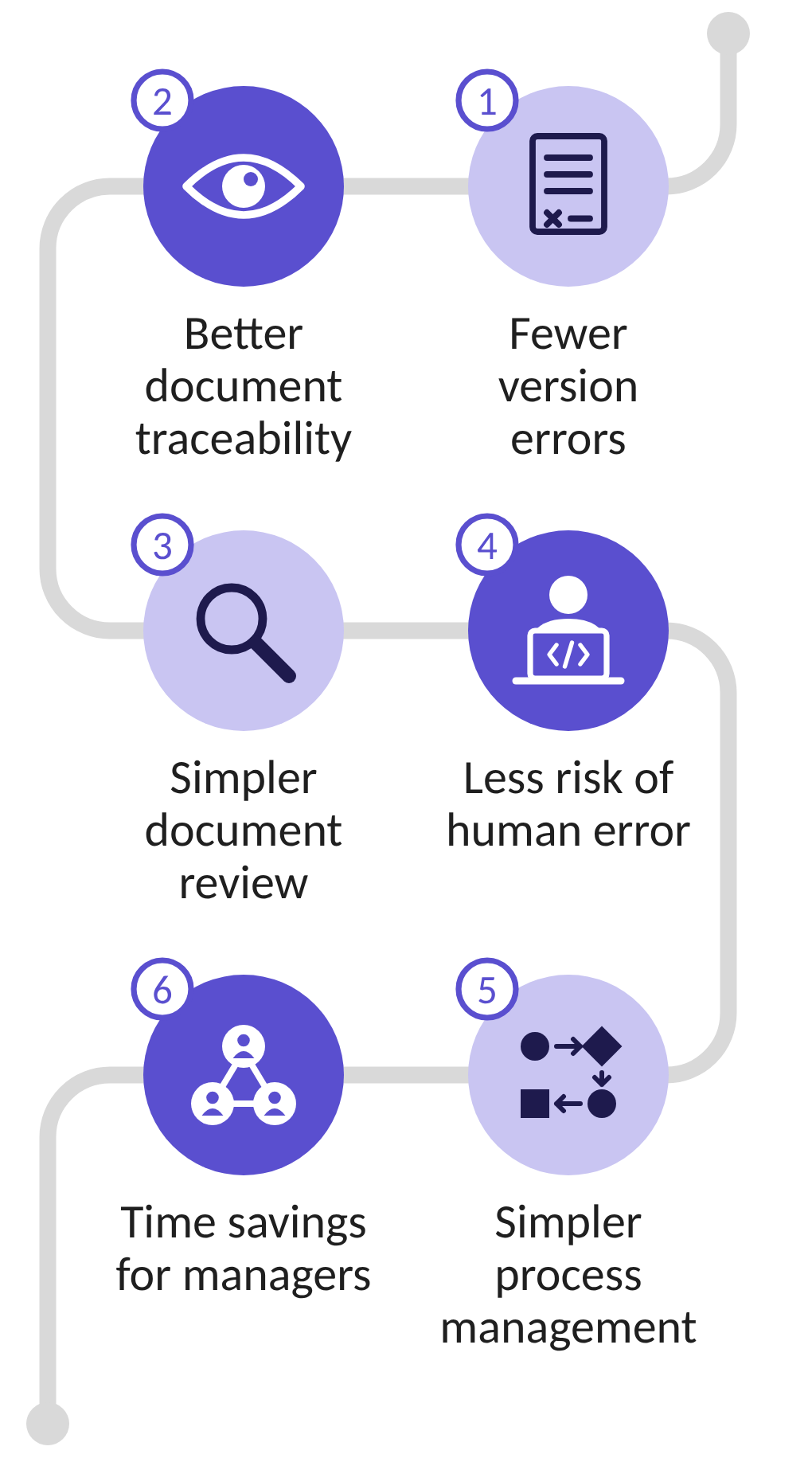
2. Better traceability and product document management
A single design change generates a cascade of new documents: a change request, a change order, updated CAD files, and a revised bill of materials. Without a central system, these end up scattered across email, servers, and personal folders.
A PLM system classifies and indexes all product information in one shared technical data repository. Each document carries its own history log, updated with every edit, approval, or move. You can rebuild the full history of a part in seconds instead of digging through inboxes. For regulated industries like aerospace and medical devices, this traceability is what gets you through an audit.
3. Faster document review and approval
Few things frustrate engineers more than reviewing a document only to learn that the latest changes were sitting in someone’s inbox. PLM gives every contributor direct access to the current version and its full change history.
Check-in/check-out stops parallel copies from multiplying and saves the time teams spend reconciling conflicting versions. Workflow tracking notifies each reviewer automatically when it’s their turn to review, comment, or approve.
4. Less human error in product data management
Every product brings more documents with it, and managing them eats into engineering time. The rigor this work demands also leads to costly mistakes when teams rush.
PLM automates the repetitive, low-value tasks: managing CAD files, updating bills of materials, and attaching quality certificates. Engineers get their time back for actual engineering, and the mistakes that come from rushed data entry go away.
5. Streamlined engineering change and process management
PLM software comes with built-in workflows for core product processes: document reviews, engineering change requests (ECRs), engineering change orders (ECOs), and final checks on the documentation package before it ships to the customer.
Centralizing these processes in one collaborative tool gives managers a global view. They can allocate resources, track progress across projects, and spot bottlenecks early. Each employee sees all their open tasks in one place, which makes it easier to plan their week and report progress.
One of our aerospace customers cut ECO cycle time by 30% within 12 months of going live on Aletiq.
6. Time savings for engineering managers
Most management work still happens in meetings and email. With PLM, managers review work, assign tasks, and track progress from a single dashboard. In Aletiq, a manager can follow up on a task or review a deliverable in about 10 minutes. Without PLM, the same work means a meeting, a few reminder emails, and a hunt through the server for the latest file.
Is PLM worth it for small and mid-sized manufacturers
Large manufacturers adopted PLM over the past decade because the benefits far outweighed the high total cost of ownership. Engineers saved hours every week, revision errors disappeared, and time-to-market dropped.
Cloud PLM now gives small and mid-sized manufacturers the same advantage, without the six-figure licenses or the 18-month rollout. At Aletiq, we believe PLM should be a competitive advantage for every manufacturer, not a privilege for those with the largest IT budgets. That conviction shaped how we built Aletiq: AI-powered, cloud-native, and deployable in weeks. For a closer look at the numbers, read our analysis of PLM ROI for small and mid-size manufacturers and our guide on how to measure PLM ROI.
How to get started with PLM software
Version control, traceability, automated reviews, fewer errors, structured change management, and time saved for managers: these six benefits add up to faster development cycles and fewer costly mistakes. Begin with your biggest pain point, whether that’s version chaos, slow ECO cycles, or audit preparation, and pick a PLM that solves it first. If you’re replacing a legacy system, our Oracle Agile PLM migration guide walks through the steps.
Want to see how Aletiq handles your product data? Book a demo.
FAQ
What are the main benefits of PLM software
PLM software reduces version errors, centralizes product data, and automates processes like document reviews and engineering changes. It also improves traceability for audits and gives managers real-time visibility across projects. Together, these benefits shorten development cycles and cut costly mistakes.
What is the difference between PLM and PDM
PDM (product data management) focuses on storing and controlling engineering data, mainly CAD files. PLM covers the whole product lifecycle, including BOMs, change processes, quality documents, and collaboration with suppliers and production. PDM is often one component of a full PLM system.
Is PLM software only for large companies
No. Cloud PLM solutions like Aletiq have made PLM affordable and fast to deploy for small and mid-sized manufacturers. Many teams go live in a few weeks without dedicated IT staff.
How does PLM reduce errors in manufacturing
PLM makes sure everyone works from the current released version of each document and part. It automates repetitive data tasks and routes changes through structured approval workflows. This removes most errors caused by outdated files and manual data entry.
How long does it take to implement PLM software
Traditional on-premise PLM projects often take 12 to 18 months. Cloud PLM platforms deploy much faster, typically in a few weeks for core features. Timelines depend on data migration volume and the number of integrations, such as CAD or ERP.


