


In a manufacturing company, almost every team ultimately works for the shop floor. Engineering, manufacturing engineering, and quality all exist to help production build the best product, as fast as possible, at the right cost. Factory productivity comes down to three numbers: product quality, cycle time, and unit cost. PLM software is usually seen as an engineering tool, but its biggest payoff often shows up in the factory.
📌 TL;DR
- PLM links every work order to the right product version, configuration, and routing.
- Operators get the correct work instruction revision instantly, with no searching.
- Fewer outdated documents mean fewer nonconformities and less scrap.
- A cloud PLM like Aletiq connects the shop floor to engineering and the ERP.
What does PLM do for manufacturing
PLM tracks every change to a product’s documentation: CAD files and drawings, specifications, work instructions, and quality procedures. Each of these documents changes regularly, so you need to track its revisions and link each product version or configuration to its manufacturing routing.
The next step is what makes PLM a productivity tool for the factory: linking each work order to the right routing for its version and configuration. Once that link exists, the right information reaches the right workstation automatically.
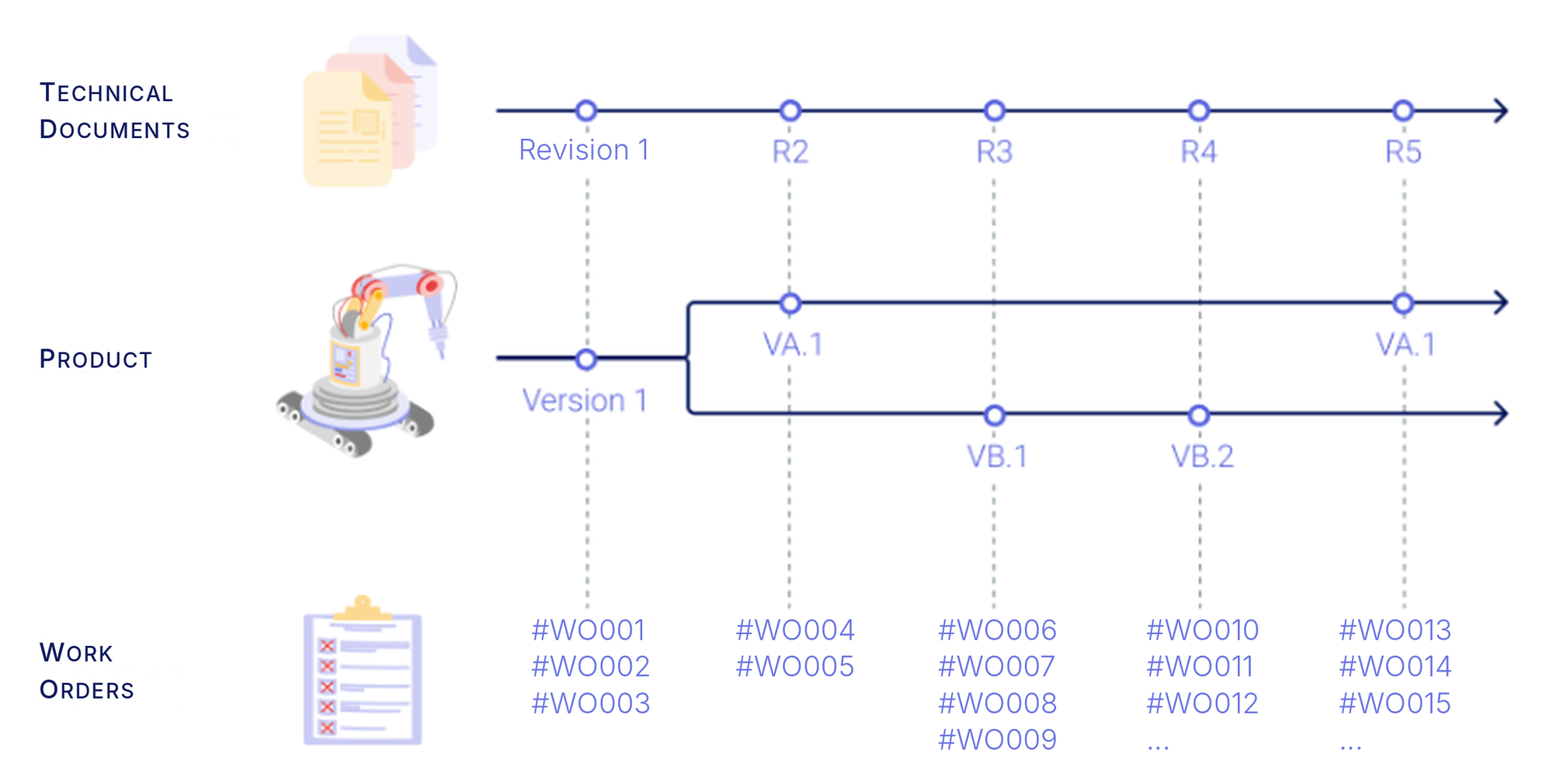
How PLM gives operators instant access to work instructions
Once the PLM links work orders, versions, configurations, and routings, technicians find the correct work instruction revision in seconds. They scan the work order barcode, and the PLM displays the document for the right operation, at the right revision. No more digging through a local server or deciphering a spreadsheet routing.
The same logic applies to machining and inspection programs. Scanning the work order loads the right program directly into the machine control software, saving time on every operation.
At Hutchinson’s aerospace site, operators reach their manufacturing plans in 3 clicks, and the shop floor runs with zero paper.
How PLM reduces nonconformities on the shop floor
Automating access to technical documentation removes manual steps, and the errors that come with them.
One of the most common causes of nonconformities is an outdated work instruction. Printed copies left on the shop floor can never guarantee the latest revision. Operators build parts from an old version, quality rejects them, and they end up as scrap. When operators scan the work order to check the revision, that error disappears.
“We can’t tolerate the slightest risk of using the wrong data in such a critical industry,” says Alexandre Saude, Engineering Manager at Hutchinson. Since deploying Aletiq, his site has cut industrialization cycles by 30 %.
How PLM speeds up feedback from the shop floor
Some PLMs, including Aletiq’s cloud platform, offer a shop floor interface. Technicians can flag a problem or suggest an improvement directly on a work instruction.
The operator simply leaves a comment describing the issue. The PLM automatically notifies the area supervisor and the team that wrote the document. Each document gets its own discussion thread, which improves communication between the shop floor and engineering, manufacturing engineering, and quality. Documentation gets updated faster, and it fits what operators actually need.
How PLM simplifies change management for area supervisors
Say an operator comments on a work instruction. The area supervisor can turn that comment into a formal change request.
The PLM’s task management then launches a workflow for the manufacturing engineering team that owns the document, and notifies everyone in the change and approval chain. Once the manufacturing engineer has revised the instruction and the manufacturing engineering lead and quality have approved it, the area supervisor confirms the change meets the need. The new revision then goes into production automatically for all future work orders.
LISI Aerospace runs this kind of workflow across its plants with Aletiq and now processes product changes 3 times faster.
How PLM handles work in progress when a document changes
Here’s the full sequence for updating a work instruction:
- An operator comments on the work instruction.
- The area supervisor opens a change workflow.
- Manufacturing engineering revises the document.
- The relevant teams approve it, and the new revision is released.
- Future work orders use the new revision.
That leaves one question: what about work orders already on the shop floor that haven’t yet reached the operation using the changed instruction?
This is where ERP integration comes in. The ERP sends the PLM the list of work orders in progress and their status in the routing. Manufacturing engineering isolates the affected orders, updates their routings with the new instruction, and pushes the updated routings back to the ERP. The PLM traces every step.
The result: technicians scanning a work order always get the right revision, and manufacturing engineers no longer walk the shop floor swapping printed instructions by hand.
Why PLM pays off on the shop floor
Engineering, manufacturing engineering, and quality teams use PLM day to day, but the factory reaps the benefits: more reliable processes, time saved for every operator, and fewer nonconformities.
At Aletiq, we believe a PLM proves its value on the shop floor, not in the engineering office. If operators still work from paper and outdated instructions, the product data isn’t really under control. A cloud PLM like Aletiq delivers these gains with a limited investment, fast deployment, and an interface operators learn in minutes. Want to see how Aletiq connects your shop floor to engineering? Book a demo.
FAQ
How does PLM improve manufacturing productivity
PLM links each work order to the right product version, configuration, and routing, so operators always get the correct work instruction instantly. It cuts time spent searching for documents, reduces errors from outdated instructions, and speeds up engineering changes.
Can operators use PLM on the shop floor
Yes. Modern PLMs like Aletiq offer a shop floor interface where operators scan a work order to open the right document and can comment directly on work instructions. Their feedback reaches engineering and manufacturing engineering automatically.
How does PLM reduce scrap and nonconformities
Most shop floor nonconformities come from outdated drawings or work instructions. PLM guarantees operators always access the released revision, which removes this source of error and the scrap that comes with it.
What is the difference between PLM and MES
PLM manages product definition data and its changes: drawings, BOMs, routings, and work instructions. A manufacturing execution system (MES) manages real-time production execution: scheduling, machine data, and production tracking. The two complement each other, and PLM feeds the MES with the right product data.
Why integrate PLM with the ERP
PLM and ERP integration syncs BOMs, routings, and work order status between the two systems. When a document changes, manufacturing engineering can update the work orders in progress without double entry, and the PLM traces every change.


